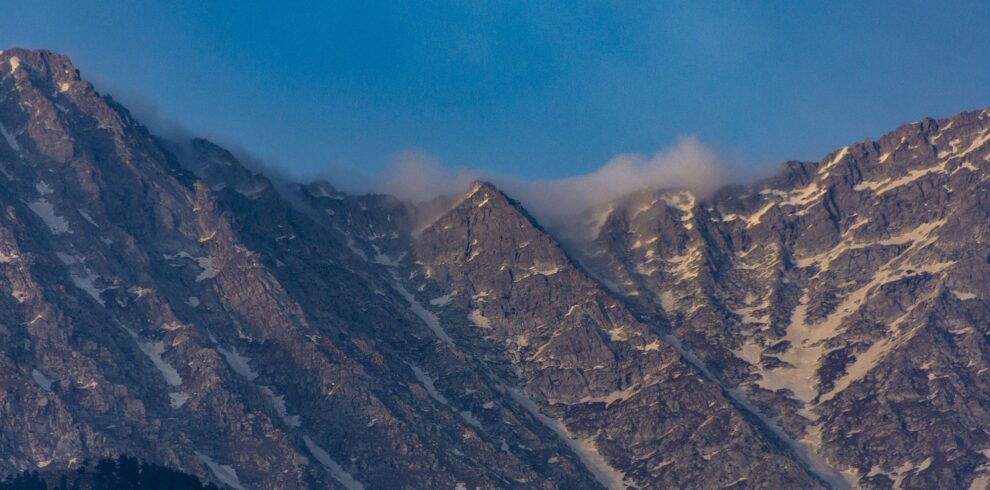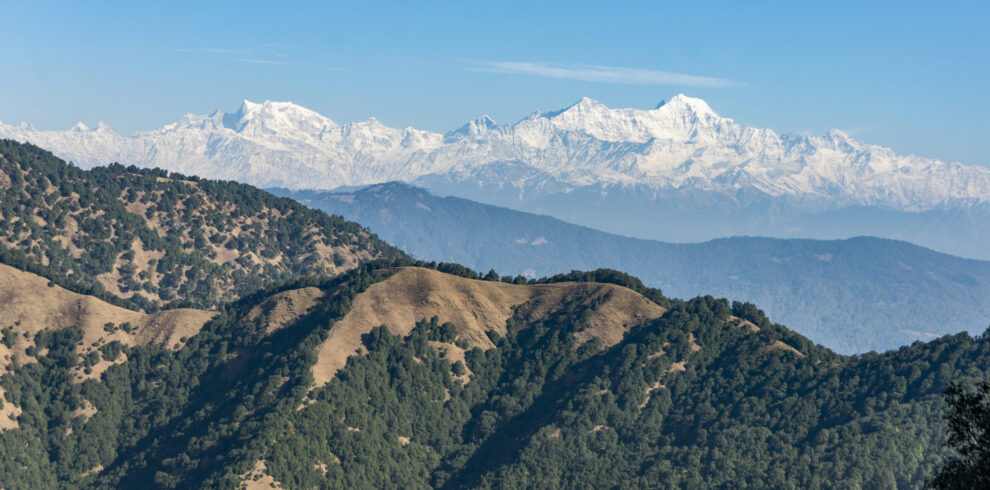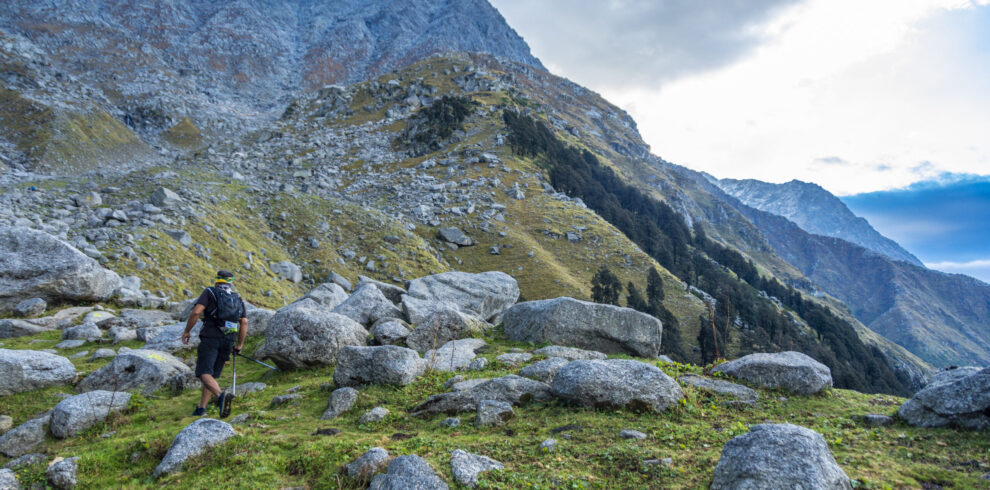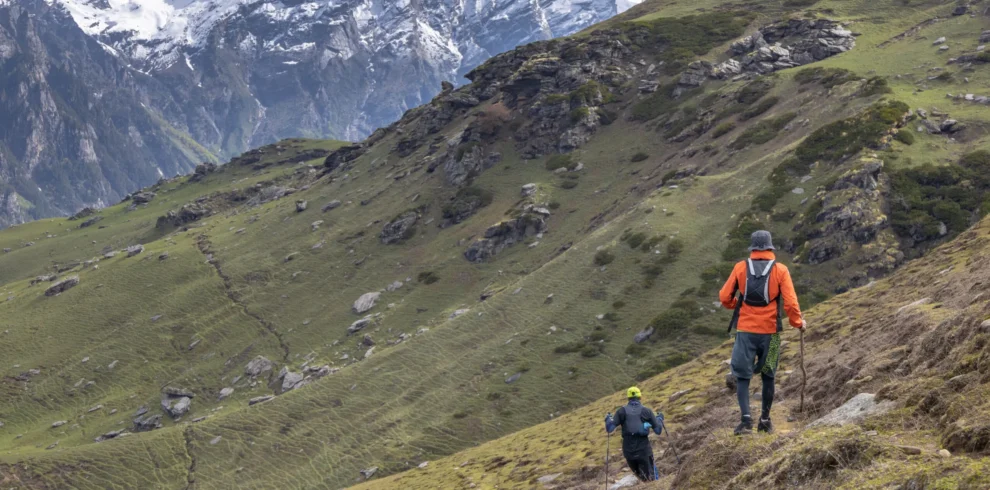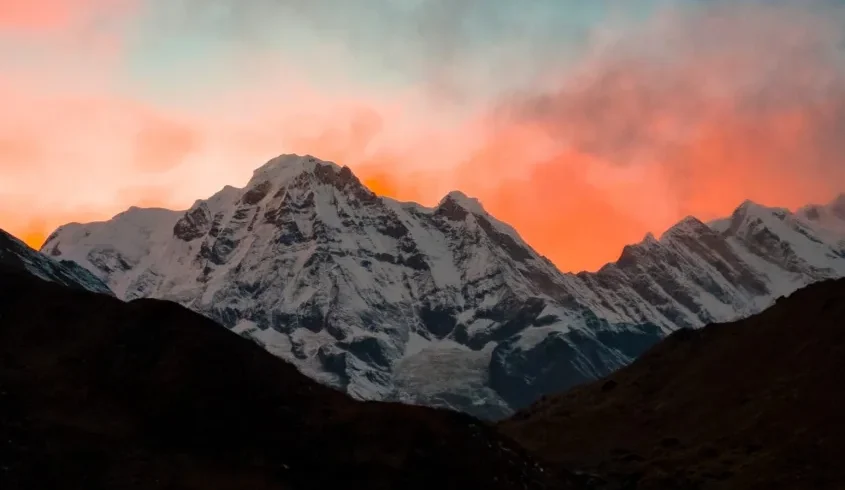
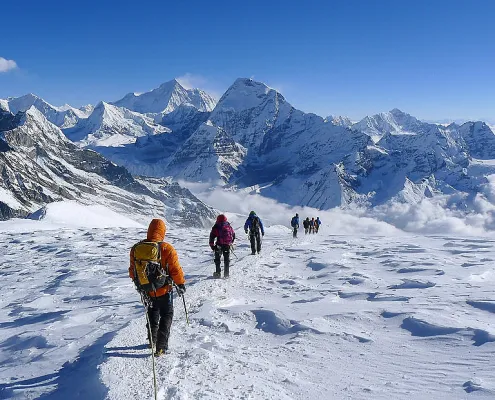
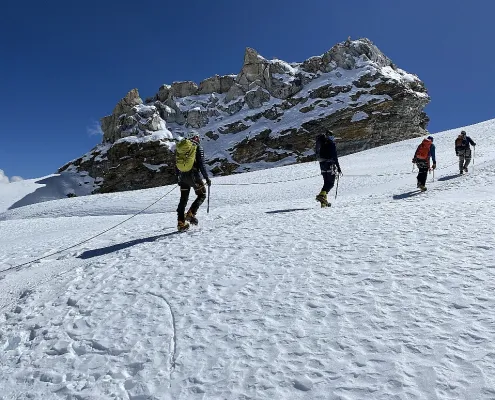
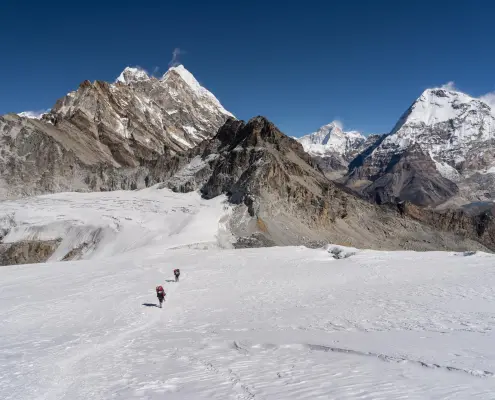
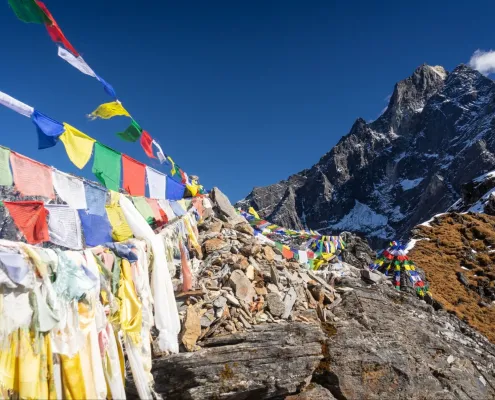
At 6,476 m, Mera Peak is the highest trekking peak in Nepal and a true endurance test at extreme altitude. While technically straightforward, this climb is defined by long summit days, thin air, and sustained glacier travel.
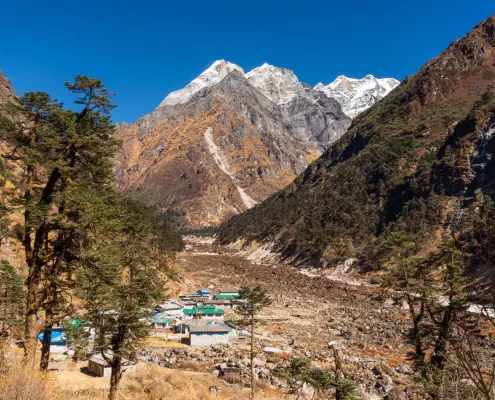
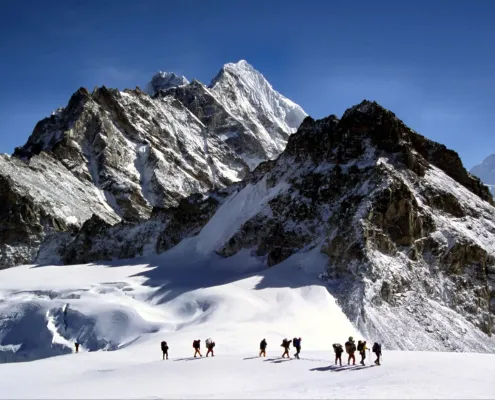
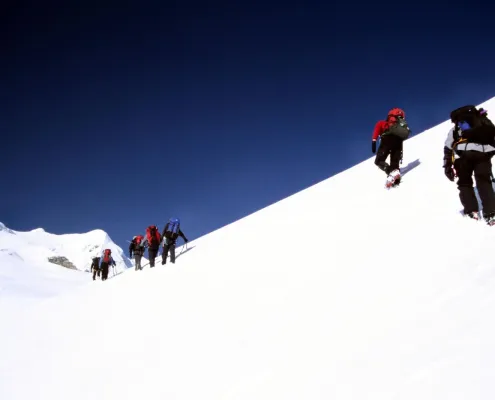
The expedition traverses remote valleys, dense forests, and high alpine terrain before reaching Mera Base Camp. Summit day involves a long, steady ascent across snowfields and glaciers, often lasting 10–12 hours. The physical challenge intensifies above 6,000 m, where every step feels deliberate and heavy.
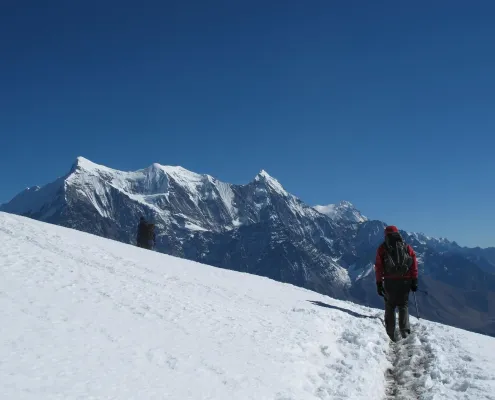
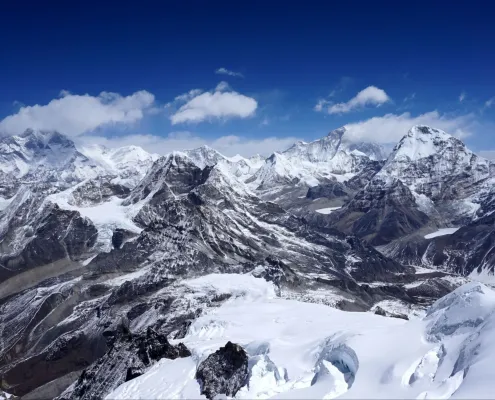
From the summit, climbers are rewarded with one of the greatest panoramas in the Himalayas — Everest, Lhotse, Makalu, Cho Oyu, and Kanchenjunga visible in one sweep. Mera Peak is ideal for climbers preparing for 7000–8000 m objectives, where endurance matters more than technical difficulty.
Note: Prices mentioned are applicable for Indian passport holders. For foreign passport holders, the cost may vary. Please connect with the Boots & Crampons team for clarity.
Note: An indemnity document will be shared before the expedition. Signing it is mandatory.
Arrive in the bustling city of Kathmandu, where you will be welcomed by our team and transferred to your hotel. The day is dedicated to meeting the expedition team, attending a comprehensive briefing, and ensuring all your gear is ready for the trek.
This day is dedicated to completing all official formalities for participants heading to Mera Peak. You’ll also have the opportunity to do any last-minute shopping or simply relax and soak in the vibrant atmosphere of Kathmandu. Spend the night in the city, mentally and physically preparing for the adventure ahead.
An early morning flight to Lukla offers breathtaking aerial views of the Himalayas. Upon arrival, the trek to Chutanga begins with a gentle walk through picturesque landscapes. The trail winds through lush forests and along the banks of the Dudh Koshi River. The 4-5 hour trek is a perfect introduction to the expedition, allowing you to adjust to the altitude and embrace the natural beauty of the region. Overnight in a traditional teahouse in Chutanga.
Today involves a challenging trek as we ascend to the Zatrwa La Pass (also spelled Zattre-la). The trail is steep but rewarding, with the pass offering stunning vistas of the Himalayas. The descent is through alpine meadows, where you’ll experience a profound sense of remoteness and tranquility. The day’s trek of 6-7 hours prepares you well for the higher altitudes ahead.
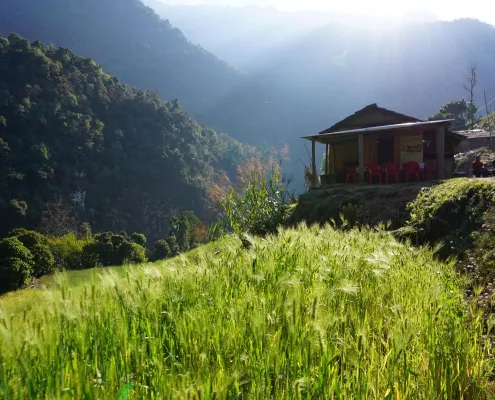
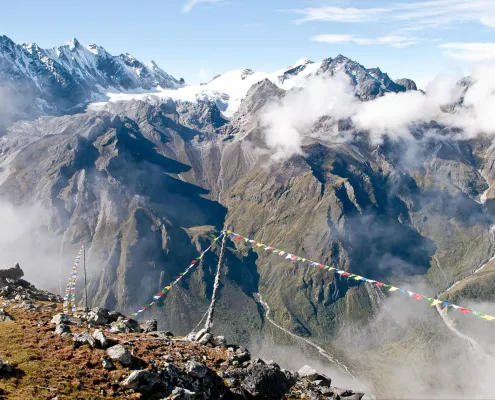
The journey continues with a descent through rhododendron and pine forests. The trail meanders through remote mountain villages, providing insights into the local culture and lifestyle. The 10 km trek to Kothe takes around 6-7 hours, offering a balanced mix of gentle walks and moderate descents. Kothe serves as a serene stopover with welcoming hospitality and clear views of the surrounding mountains.
Today’s trek leads us further into the Hinku Valley, following the Hinku River. The landscape transforms into a more alpine environment, with glacial streams and towering peaks. The 10 km trek, taking 5-6 hours, is filled with opportunities to marvel at Mera Peak’s imposing beauty and the pristine wilderness of the valley. Overnight in Thangnak, a village surrounded by stunning Himalayan vistas.
A critical day for acclimatization, helping your body adjust to the high altitude. Short hikes to higher altitudes and back are planned to improve your adaptation process. The day also allows time to relax, explore Thangnak, and engage with the local community. Proper acclimatization significantly boosts the chances of a successful summit and enhances your trekking experience.
The trek to Khare is a gradual ascent, involving 4-5 hours of walking over 7 km. The trail offers spectacular views of Mera Peak and the surrounding glaciers. Khare, the last village before the base camp, provides a mix of rustic charm and essential amenities. The evening is spent preparing for the climb ahead, with our guides offering tips and support for the next phase of the journey.
The trek from Khare to Base Camp involves crossing the Mera La Pass. The 4-5 hour trek over 5 km is a mix of trekking and light climbing. The base camp, set amidst snowfields, offers a true alpine experience with stunning views of the Himalayan giants. The evening is spent resting and acclimatizing, with all eyes set on the summit day.
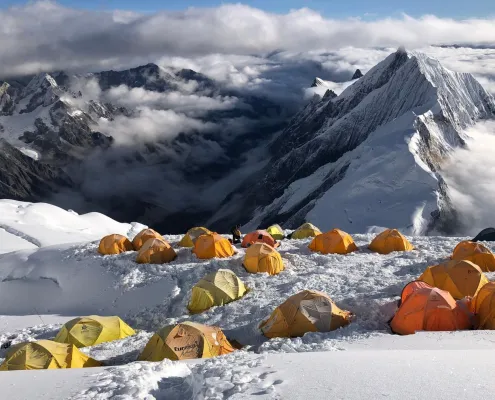
The trek to High Camp is a crucial step towards the summit. The 4-5 hour trek over 4 km involves navigating through snow and ice fields. The isolation and beauty of High Camp set the stage for the summit push. An early dinner and rest are essential as we prepare for the midnight departure to the summit.
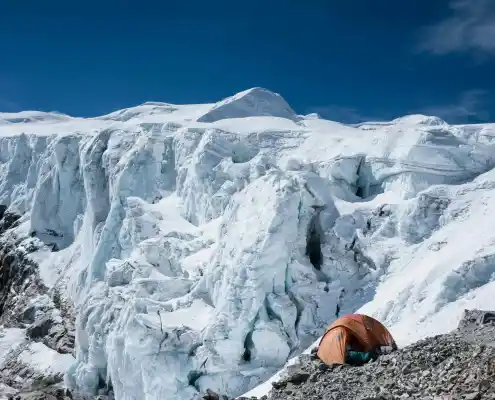
The summit push starts in the early hours, with a challenging climb through snowfields, crevasses, and a steep ridge. The 6-8 hour ascent is rewarded by panoramic views of Everest, Lhotse, Makalu, and Kanchenjunga. After celebrating the achievement, we descend back to Khare, reflecting on the incredible accomplishment.
We begin the descent back to Kothe, taking about 6-7 hours over 12 km. The trail offers a nostalgic return through familiar landscapes, allowing time to reflect on the incredible summit experience.
Today’s trek covers 10 km in 6-7 hours, bringing us back to Zattre-La (also spelled Zatrwa-La). The ascent is steady, with the Zatrwa La Pass once again offering breathtaking views. The evening is spent in the cozy comfort of a mountain teahouse.
A long but rewarding trek of 14 km (6-7 hours) brings us back to Lukla. The journey is filled with a mix of emotions—pride in the achievement and the bittersweet feeling of leaving the mountains behind. Celebrate with the team and enjoy the last evening in the Himalayas.
A short flight from Lukla to Kathmandu offers one last aerial view of the Himalayas. The rest of the day is for relaxation, exploring Kathmandu, and celebrating the expedition’s success. You can enjoy a farewell dinner with the team or explore the city’s cultural treasures.
Bid farewell to Nepal as you depart from Kathmandu. The expedition concludes with unforgettable memories, new friendships, and a profound sense of achievement. We wish you a safe journey home and hope to see you on another adventure soon
Please read carefully before registering
At Boots & Crampons, preparation is not optional. The level of training required depends on the duration, altitude, and technical difficulty of the trek or expedition you are signing up for.
Proper preparation increases not just your chances of success, but also your safety and enjoyment in the mountains.

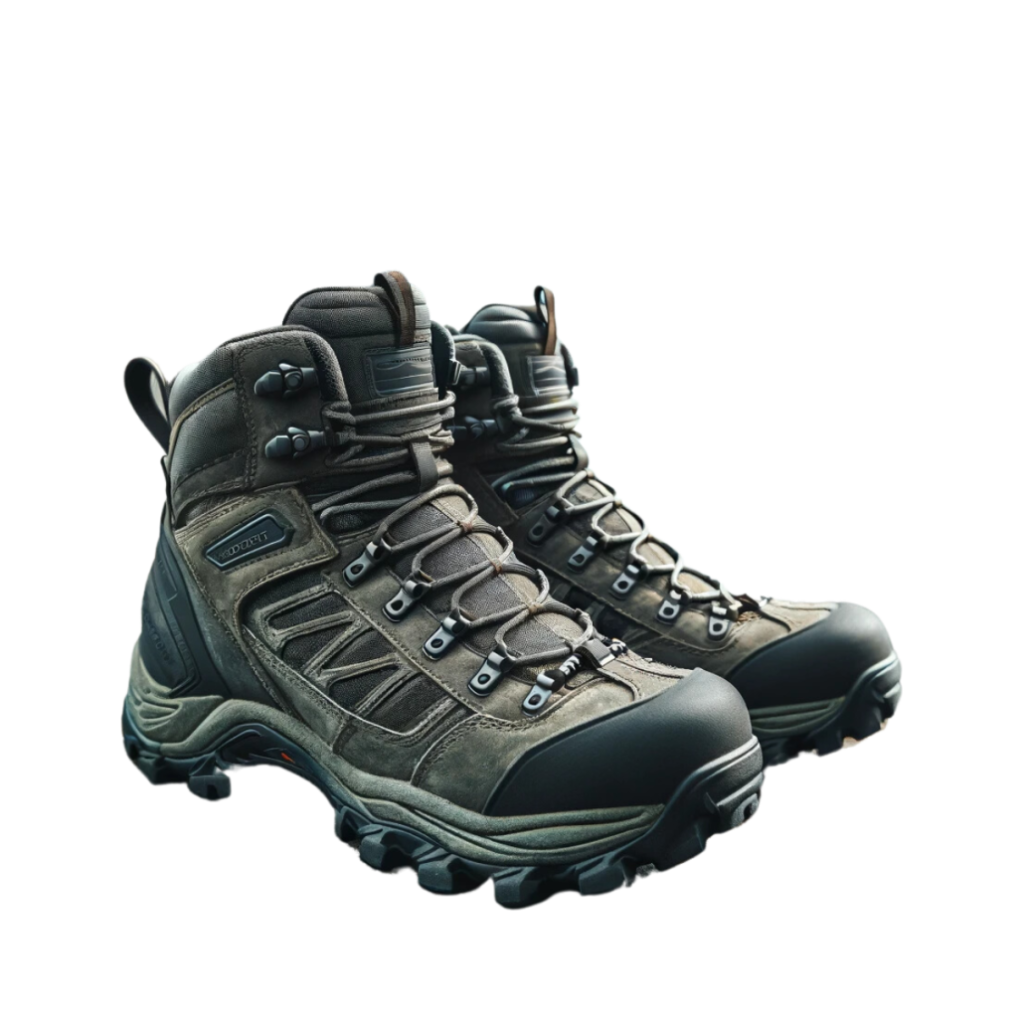
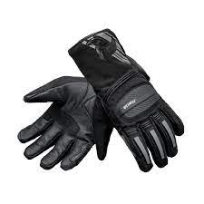
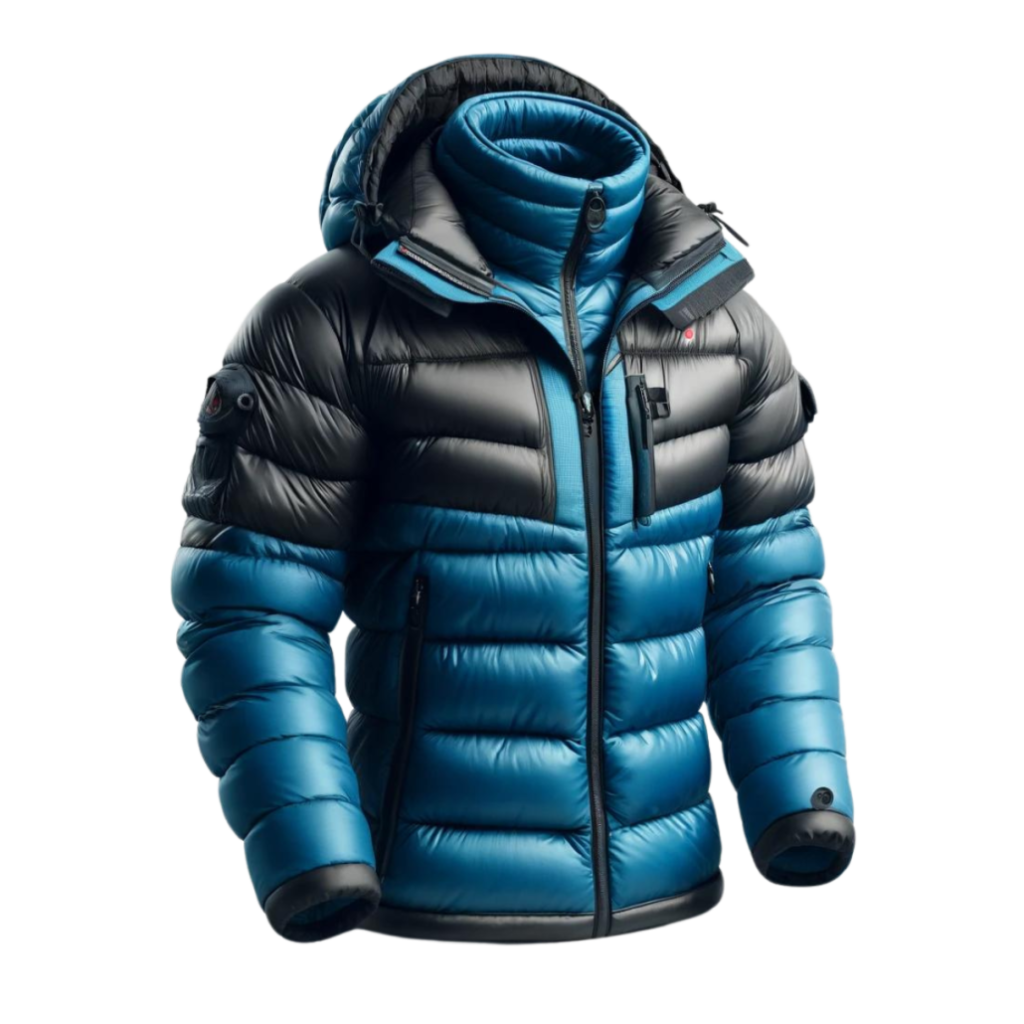
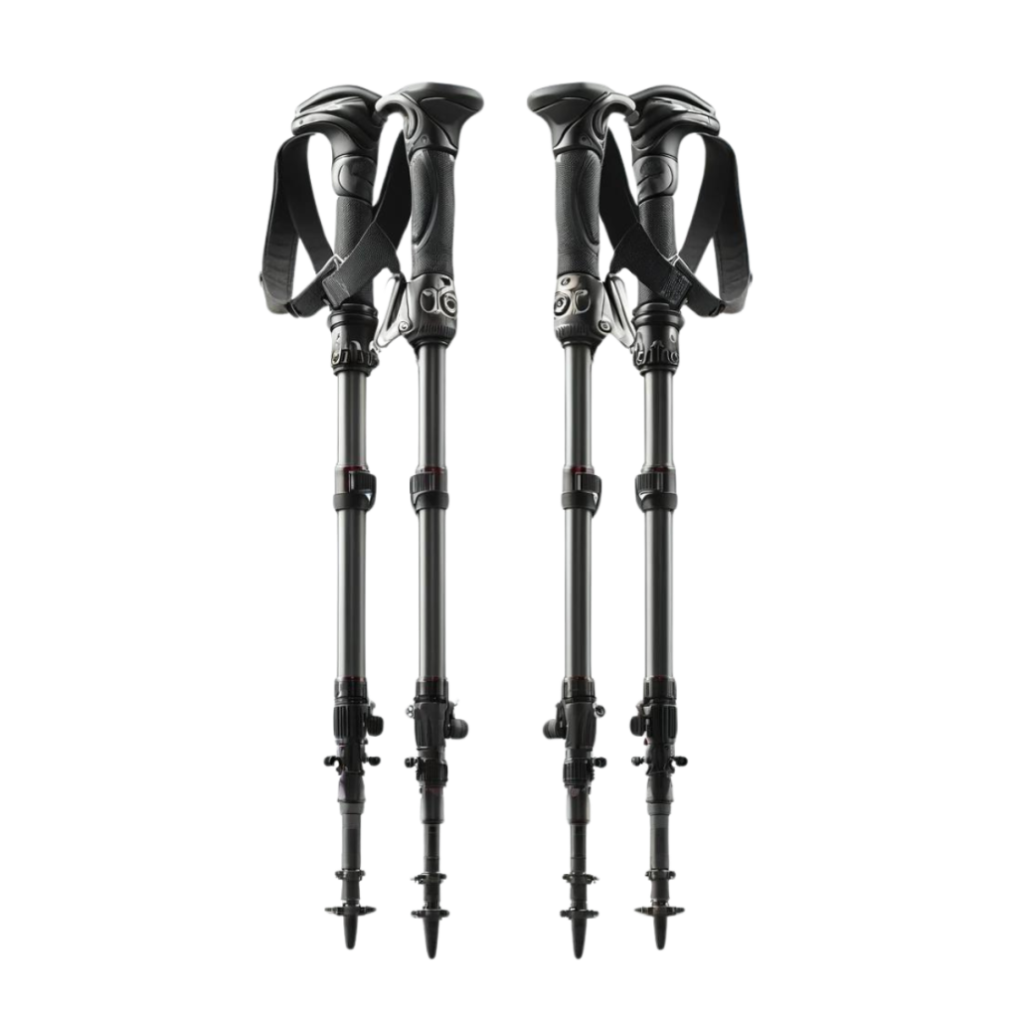



*Rental Gears Required*
Visit our Contracted Business Partner website – Summit Yak
for details on trek-specific rental gears and rates.
The expedition includes high-altitude trekking trails, glacier travel, snow and ice slopes, and exposed summit sections. You’ll trek through stone paths, moraines, and snowy slopes before the final summit push on snow and ice.
The summit of Mera Peak is 6,476 m (21,247 ft) — making it one of the highest trekking peaks in Nepal. You will spend multiple days above 4,000 m, with significant altitude exposure during summit efforts.
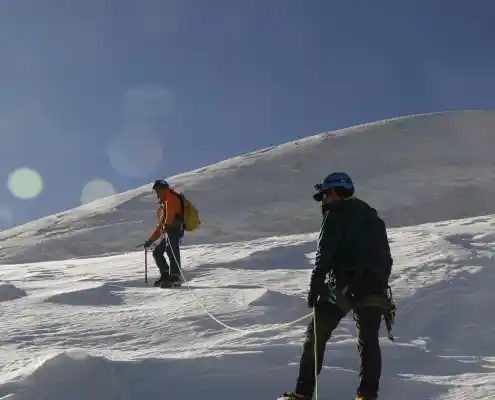
Mera Peak is a challenging alpine expedition. While it is non-technical in the sense that no advanced rock climbing is required, the summit push involves snow and ice slope travel with crampons and an ice axe. It demands stamina, acclimatization, and comfort with snow slopes.
You do not need advanced technical rock or ice-climbing skills, but you do need to be familiar with:
The best climbing windows are:
Most itineraries last 14–18 days, including:
Daily trekking and climbing can range from 6 to 10+ hours depending on altitude and weather.
Participants must have:
➡️ Refer to the Preparation Guide for detailed fitness and training expectations.
Key gear includes:
A complete gear checklist is included in the Preparation Guide.
Water is obtained from glacial streams and snow melt. The expedition team treats water, but climbers should carry personal purification tablets or filer water bottles as backup
Mera Peak is a classic high-altitude expedition that blends challenging snow/ice travel with breathtaking Himalayan vistas. With disciplined preparation and respect for altitude, it’s an immensely rewarding climb.
Boots & Crampons staff of highly trained professional guides is here to make your journey as safe and secure as possible. All of our trekking guides are medically certified and have abundant experience using their training in mountainous environments.
Our safety standards are based on the experiences of our founder, managing risk in some of the world’s most hostile environments.
While we advise our trekkers to carry light, our guides are always prepared with:
Be it queries about the trek, customization or anything else, our team is eager to assist you.
Need your questions answered right away?
Get in touch with us at
Discover similar treks from Boots & Crampons that quench your thirst for adventure.

Discover similar treks from Boots & Crampons that quench your thirst for adventure.