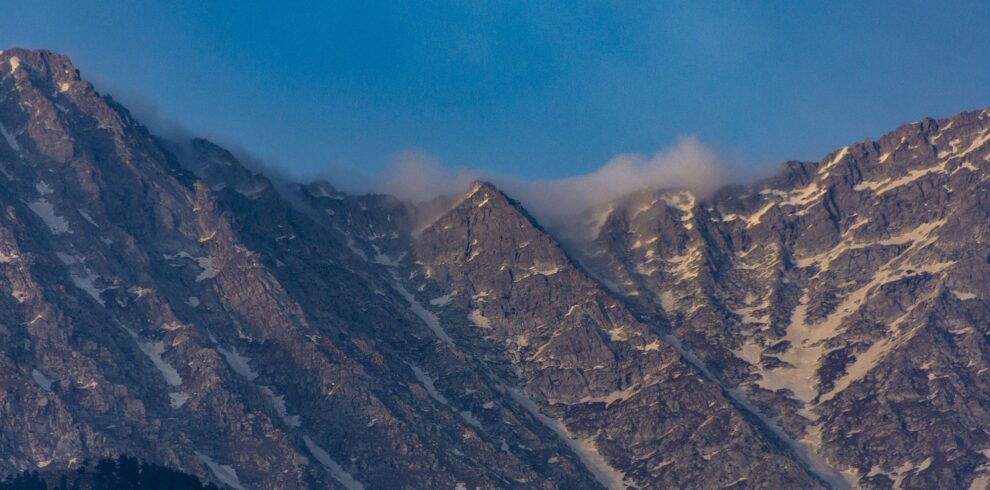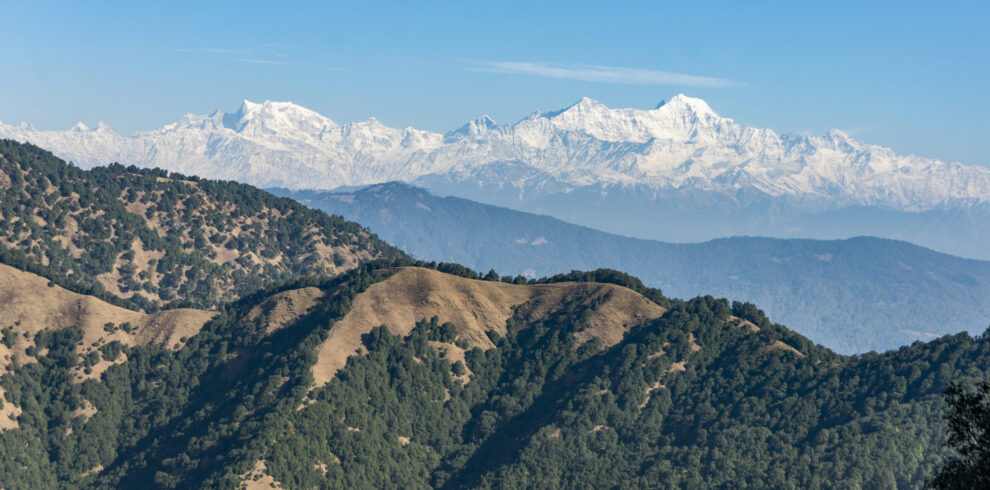
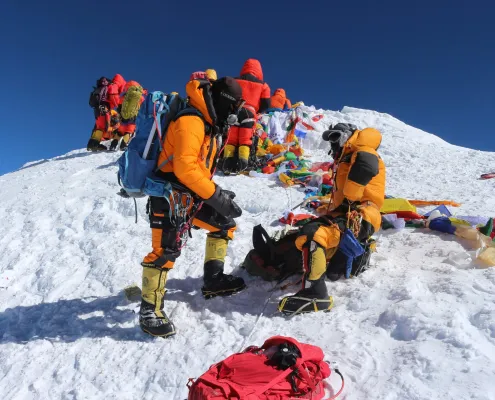
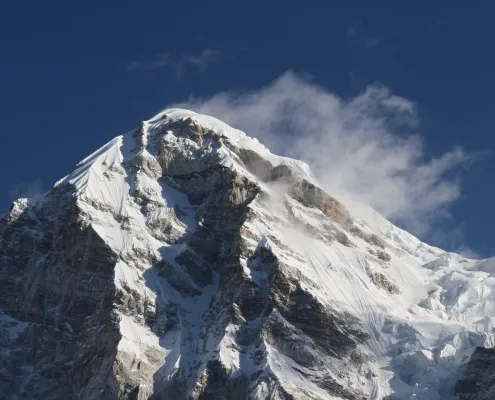
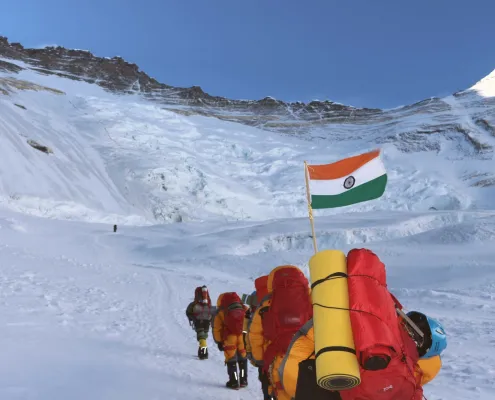
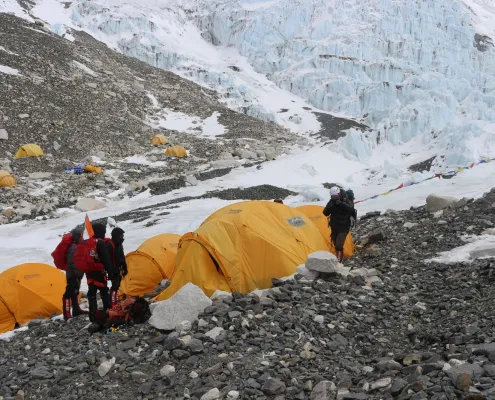
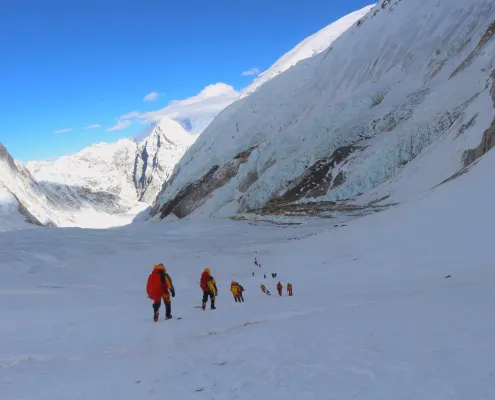
If you were to ask any adventurer about their ultimate dream, they would undoubtedly mention the word “Everest”. Who wouldn’t want to stand at the top of the world and touch the sky? The Everest Expedition is a once-in-a-lifetime experience that is highly sought after by thrill-seekers around the globe. With an altitude of 8848m, Mount Everest is the tallest peak in the world and is also known as “The Sagarmatha” in Nepali. The southern face of the mountain lies in Nepal, while the northern face is in Tibet.
Formerly known as Peak XV, the mountain was renamed Mount Everest after Sir George Everest, who was the lead surveyor in 1856. Since Tibet opened climbing in the early 1920s, the mountain has fascinated mountaineers from all over the world. The first attempt to scale the summit was made in 1922 by a British expedition team led by Charles Bruce. Several attempts were made to climb Everest before the successful ascent by Edmund Hillary and Tenzing Norgay via the South route on May 29, 1953. Today, it is reported that around 1000 ascent attempts are made every year.
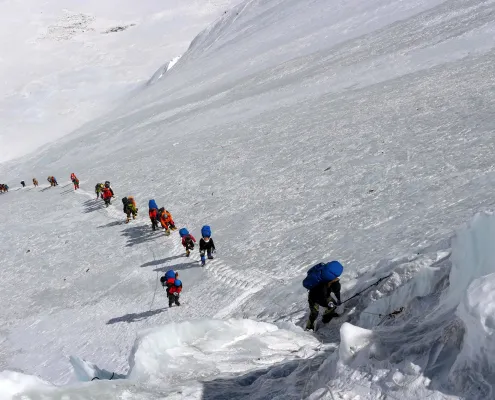
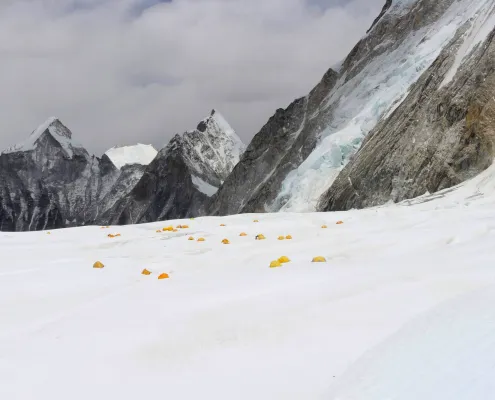
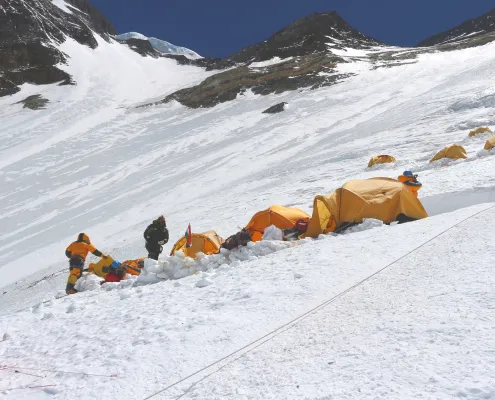
To reach the summit, we will take the southern route. This trip is suitable for those who have previous experience scaling a few 7000m peaks or even higher. The real trek starts from the Base Camp, which takes around 7 days on foot to reach. We will then move on to Camp I (6,065m) where we will see the Khumbu glacier. From the Khumbu Glacier, it’s a gradual slope of around 450m to Camp II (6,750m) and around 610m to Camp III (7,100m). At Camp III, which is located at the head of Lhotse, you will need oxygen cylinders. After crossing the 8000m elevation mark, you will reach Camp IV (7,910m), also known as the “Death Zone”.
The Mount Everest Expedition is undoubtedly a once-in-a-lifetime opportunity. However, there are many obstacles that must be overcome, including high altitude, severe weather conditions, and avalanches. It’s essential to be well-trained and in excellent physical condition before attempting the climb. Depending on your current fitness level, you will need to train for several months before embarking on the ascent. Climbers must build cardiovascular and muscular strength, as oxygen levels drop by 60-70 percent from sea level. You must also be able to carry large backpacks to the summit, as you will be carrying a cylinder of oxygen and a large backpack. It’s crucial to acclimatize to the weather conditions and be prepared for rock falls and avalanches. Learning rescue techniques would be an added advantage.
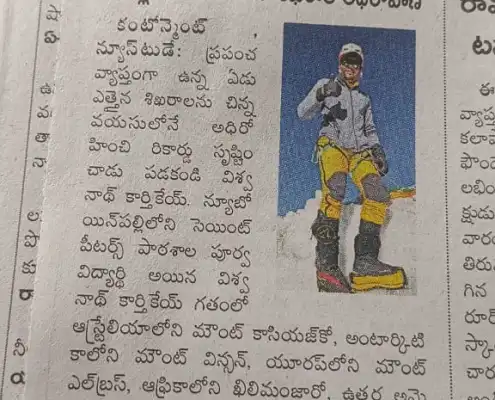
Since its inception, Boots & Crampons has been organizing expeditions to the highest mountains in the world, including annual ascents of Mount Everest. However, 2024 marked the best season yet for B&C and its climbers. This year, several climbers achieved remarkable feats and made a name for themselves.
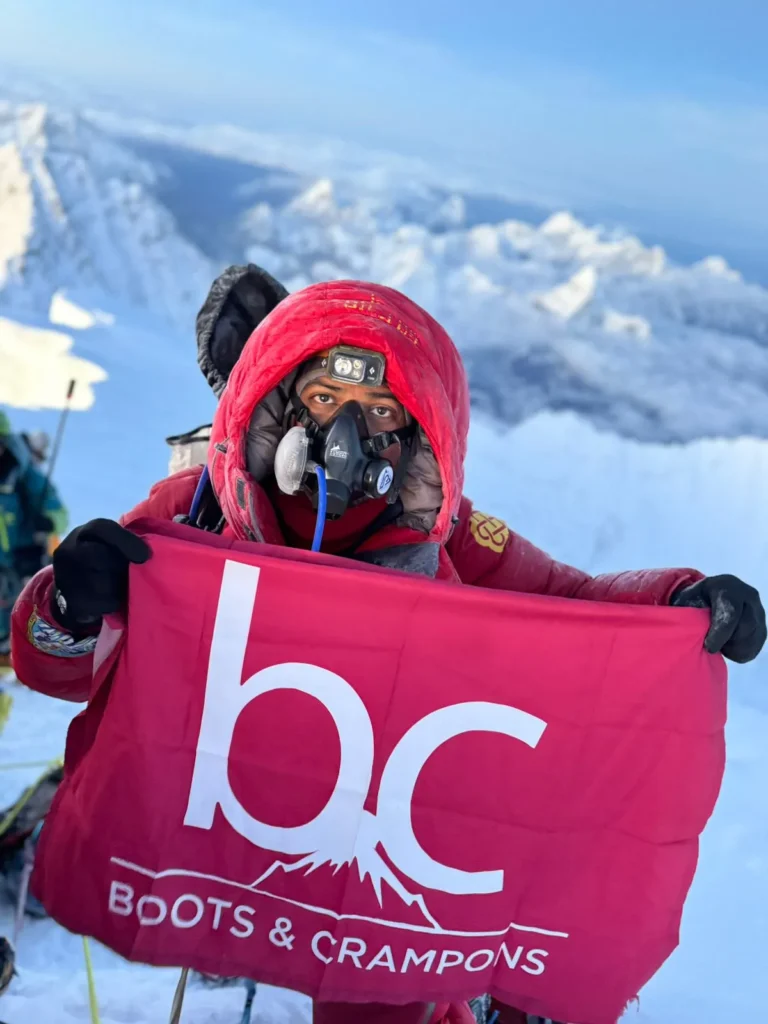
The first person to summit Everest and Lhotse twice within 6 days and 7.5 hours. Satyadeep’s remarkable stamina and skill highlight his exceptional mountaineering prowess.
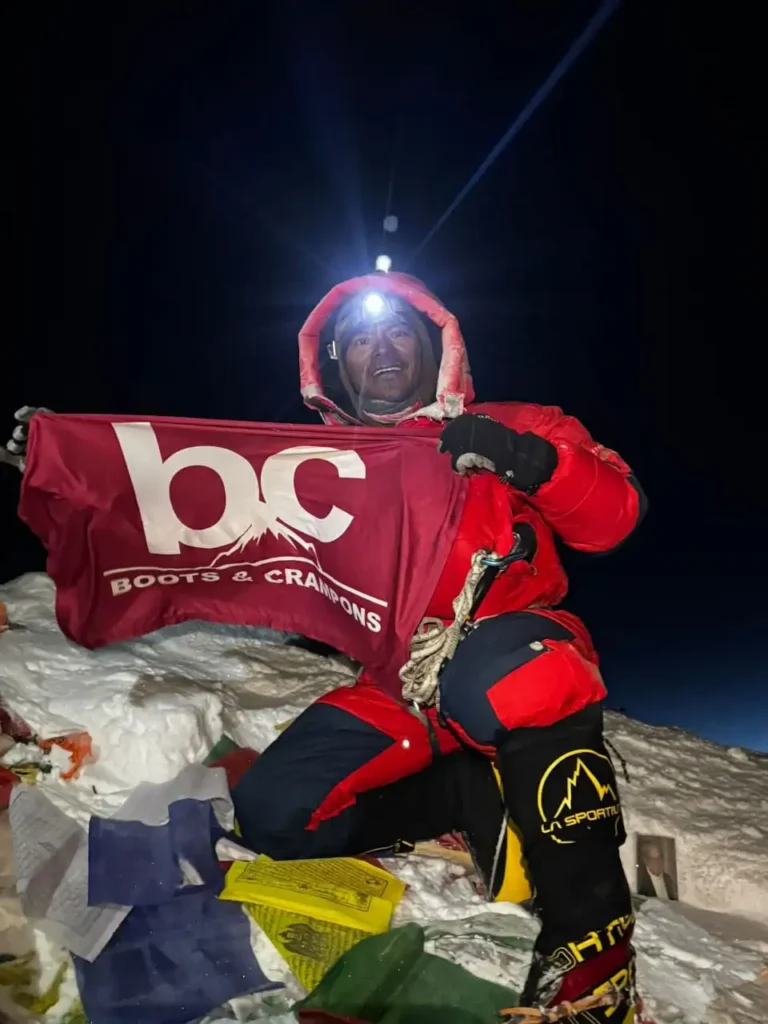
The first Indian civilian to climb Everest without supplemental oxygen. Rigzin’s incredible endurance and determination have set a new benchmark for high-altitude climbing.
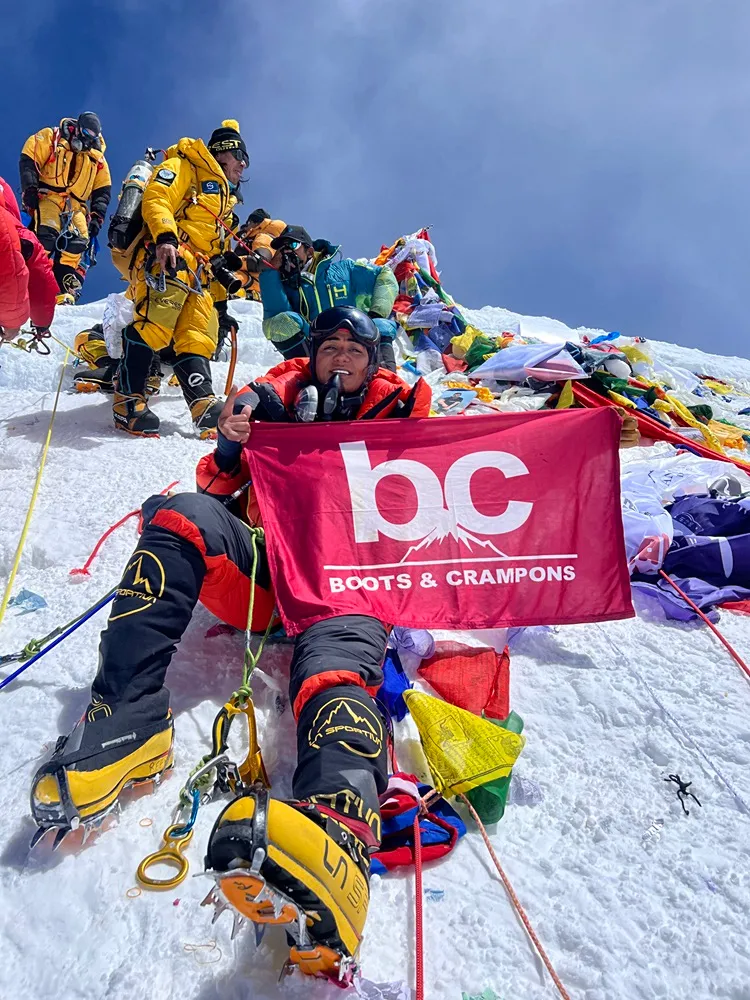
Summited both Mount Everest and Mount Lhotse in 20.5 hours, becoming the fastest Indian female mountaineer to accomplish this dual ascent. Reena’s speed and resilience are truly inspiring.
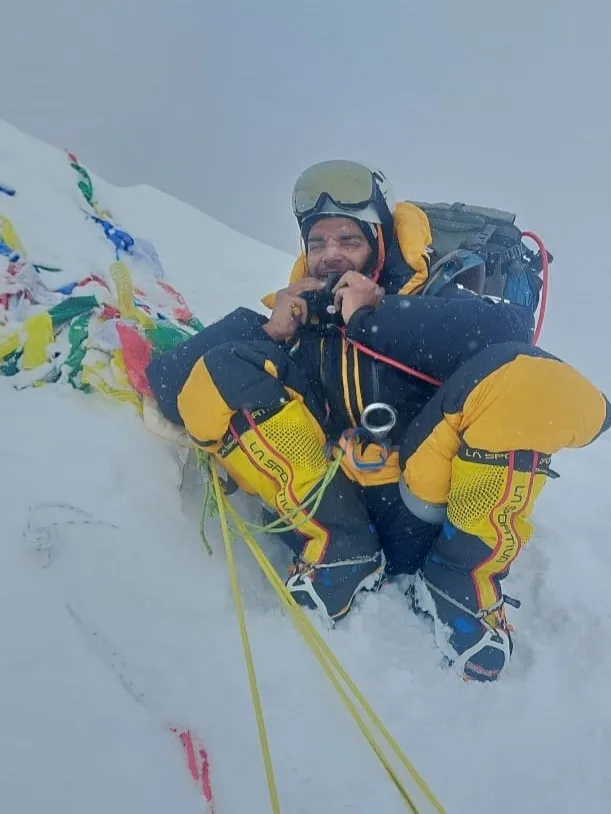
Successfully reached the summit of Lhotse, showcasing his dedication and perseverance in overcoming one of the world’s most challenging climbs.
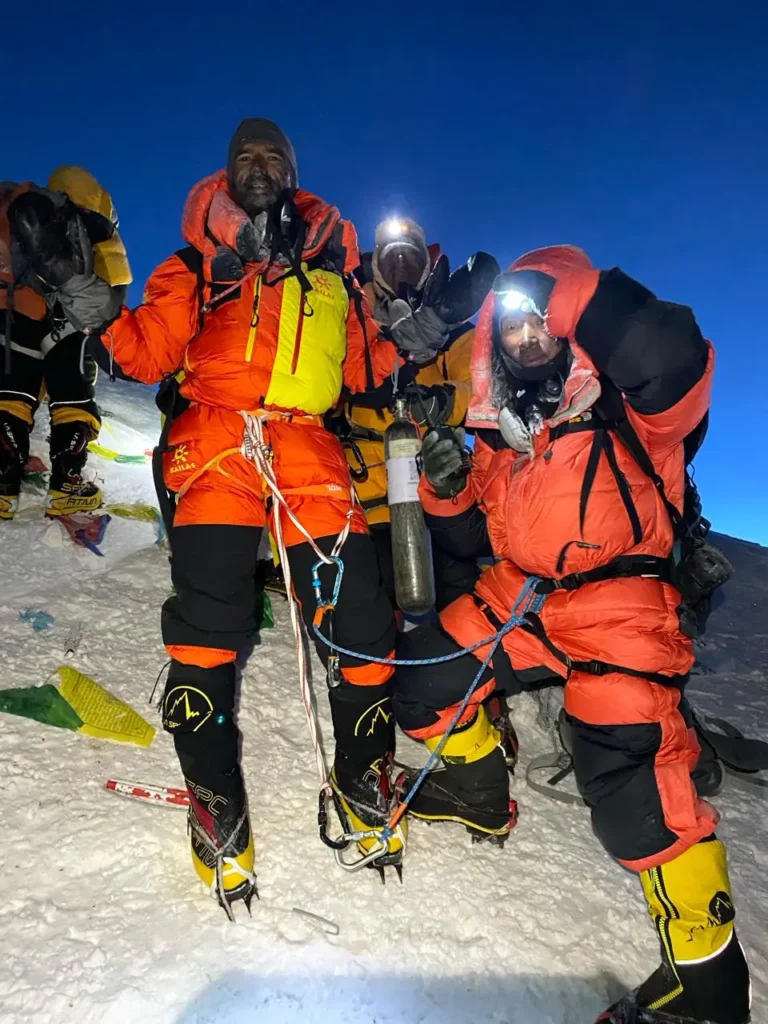
Achieved the incredible feat of summiting Everest, demonstrating his commitment and tenacity in the face of extreme conditions.
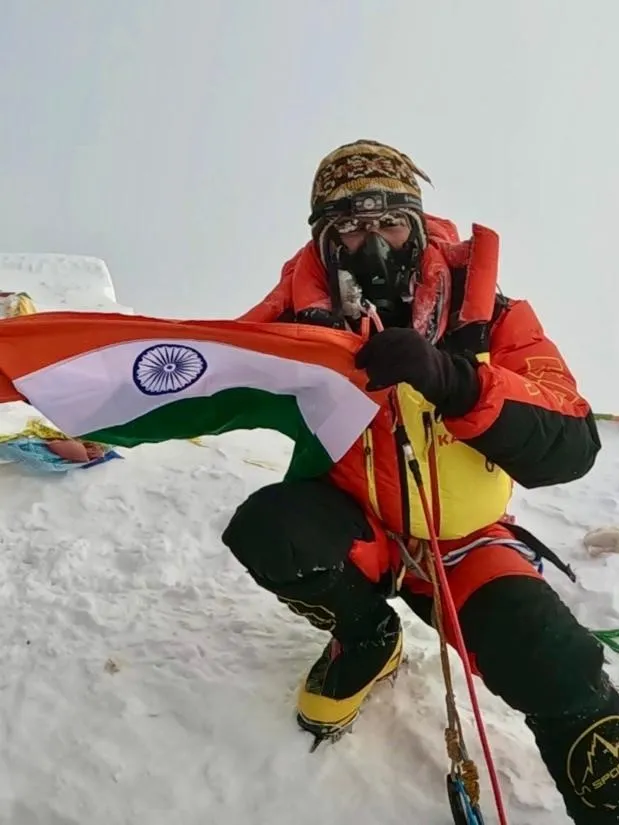
The first Indian Army officer to summit both Everest and Lhotse, Major Chirag’s dual ascent highlights his extraordinary leadership and resilience.
Day 1: Arrival in Kathmandu (1,400 m)
Transfer to the hotel and rest after your journey.
Day 2: Official Formalities & Last-Minute Shopping
Attend briefings, complete permit formalities, and shop for essentials.
Day 3: Fly to Lukla & Trek to Phakding (2,460 m)
Scenic flight to Lukla followed by a short trek through the Dudh Koshi valley.
Day 4: Trek to Namche Bazaar (3,440 m)
Enter Sagarmatha National Park and climb to the famous Sherpa town.
Day 5: Rest & Acclimatization in Namche
Explore nearby hikes for acclimatization, like Everest View Hotel or Khumjung.
Day 6: Trek to Dibuche (3,820 m)
Pass through Tengboche, home to the region’s largest monastery.
Day 7: Trek to Dingboche (4,410 m)
Gradual ascent through alpine terrain and views of Ama Dablam.
Day 8: Rest & Acclimatization at Dingboche
Short hikes to Nagarjun Hill or Chhukung for altitude adaptation.
Day 9: Trek to Lobuche (4,900 m)
Cross the glacial moraine and memorial site for fallen climbers.
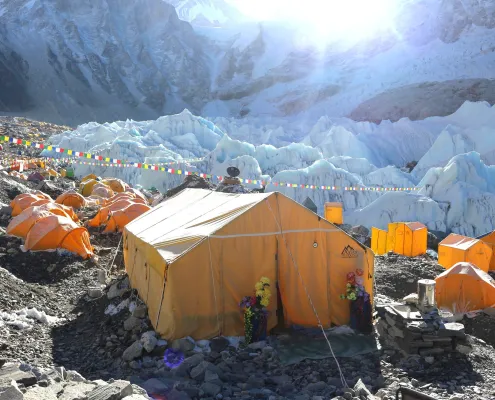
Day 10: Trek to Everest Base Camp (5,380 m)
Reach EBC and settle into expedition life among the world’s highest giants.
Day 11–14: Acclimatization, Prayer Ceremony & Training
Day 15–43: Climbing Period – Everest Summit Attempt
Rotations between base and higher camps, culminating in the summit bid during the best weather window.
Day 44: Return to Everest Base Camp
Descend safely back to Base Camp after summit and recovery.
Day 45: Trek to Pheriche (4,280 m)
Begin descent with fresh energy and views of the Khumbu Valley.
Day 46: Trek to Namche Bazaar
Retrace the trail through Pangboche and Tengboche.
Day 47: Trek to Lukla
Final day of trekking – a time to reflect and celebrate with your team.
Day 48: Fly Back to Kathmandu
Scenic morning flight and transfer to the hotel.
Day 49: Free Day in Kathmandu
Relax, explore the city, or shop for souvenirs.
Day 50: Final Departure
Transfer to the airport for your onward journey.



Discover similar treks from Boots & Crampons that quench your thirst for adventure.