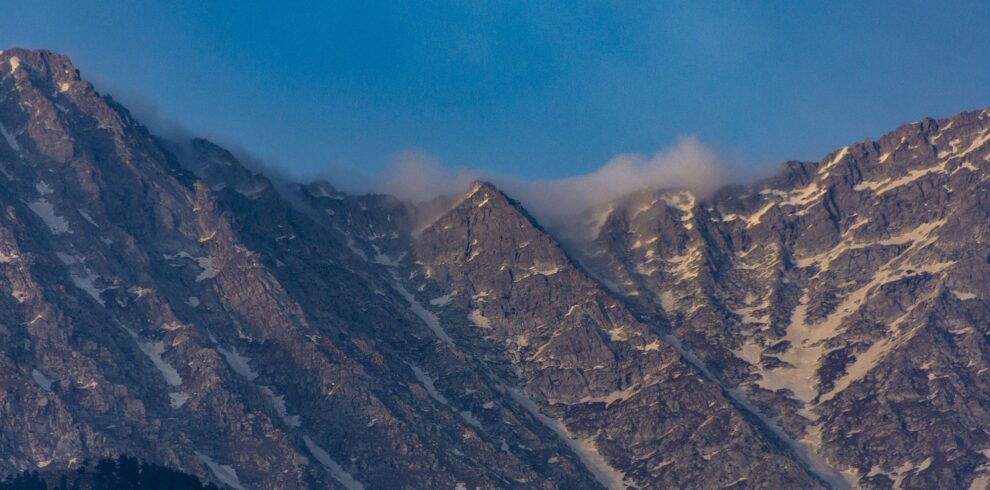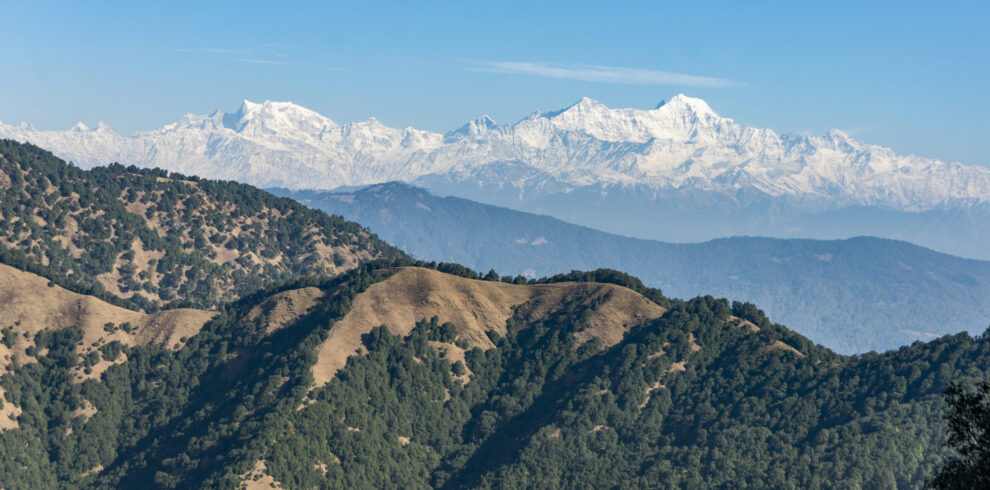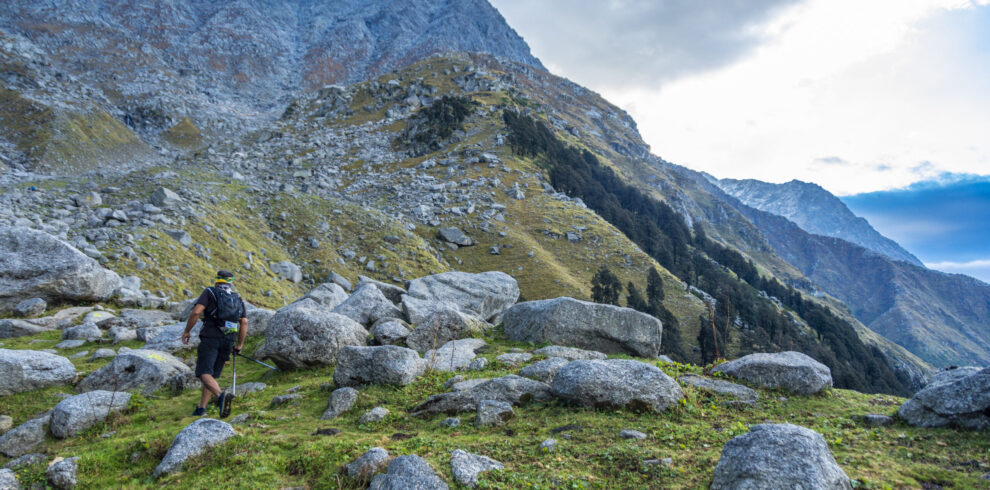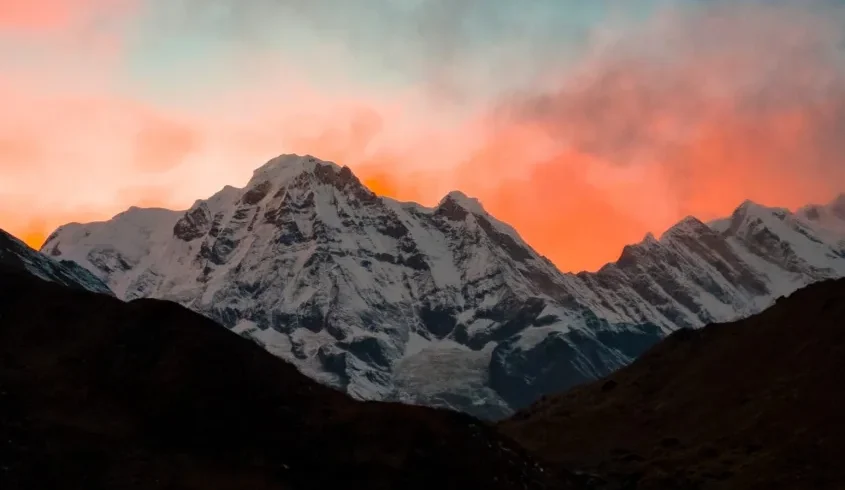
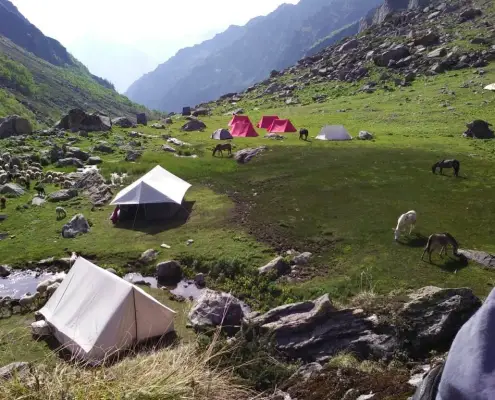
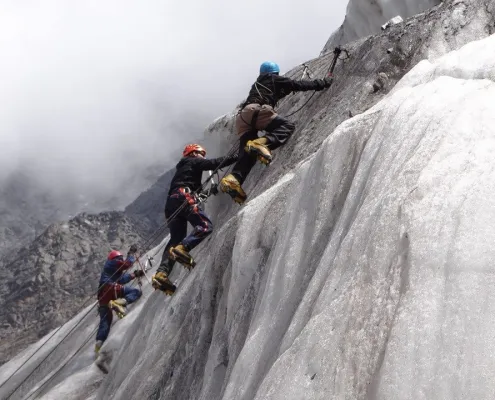
Deo Tibba (6,001 m) is one of the most beautiful yet underestimated high-altitude climbs in the Indian Himalayas. Set deep in the Pir Panjal range, this expedition combines rugged terrain, glacier travel, and technical snow climbing.
The route crosses glacial valleys, steep snow slopes, and exposed ridges. Summit day demands confidence with crampons, rope systems, and movement on snow and ice. Cold conditions, altitude, and technical terrain combine to create a demanding but deeply rewarding climb.
Deo Tibba is ideal for climbers who want technical experience at 6000 m within India and are ready to move beyond trekking peaks.
Note: Prices mentioned are applicable for Indian passport holders. For foreign passport holders, the cost may vary. Please connect with the Boots & Crampons team for clarity.
Note: An indemnity document will be shared before the expedition. Signing it is mandatory.
On arrival in Manali, we transfer to our hotel and check in. The rest of the day is kept light to recover from travel fatigue. In the evening, we head out for a short walk around Manali to stretch our legs and begin adjusting to the mountain environment. Later, the expedition leader conducts a detailed introduction, reviews the climb plan, and completes final gear checks and preparations for the Deo Tibba expedition. Overnight at the hotel in Manali.
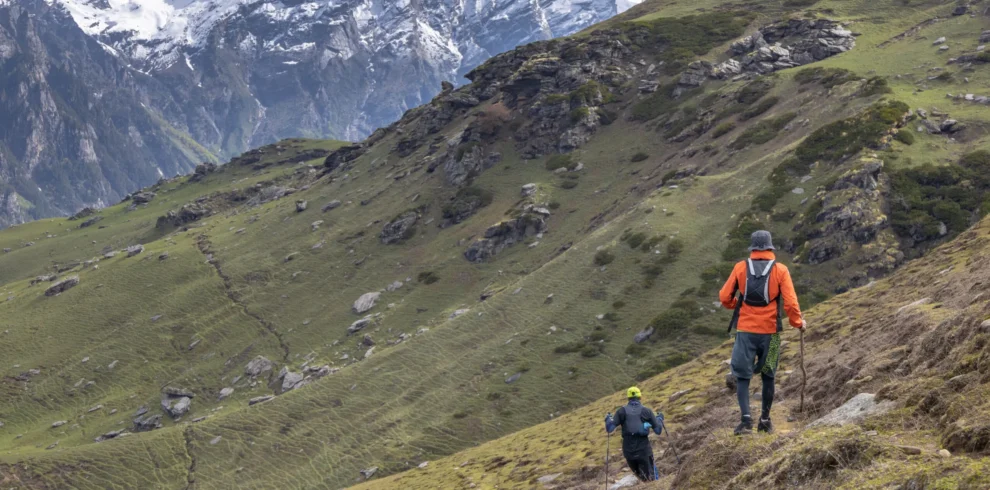
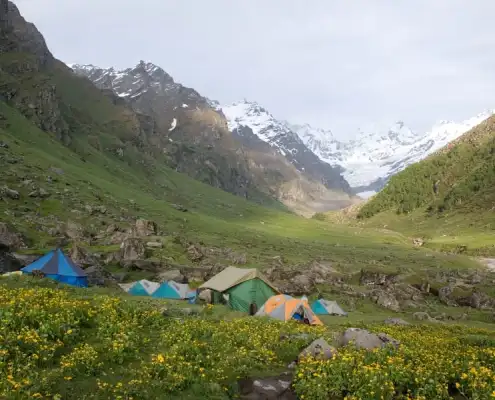
After breakfast, we check out from the hotel and begin a scenic drive to Khanol village, passing through picturesque Himalayan landscapes and apple orchards. Upon reaching Khanol, we start our trek toward Chikka, following a well-defined trail through dense forests and alongside the Jagatsukh Nallah. The gentle ascent helps ease us into the trekking phase of the expedition. On arrival at Chikka, we set up camp in a beautiful meadow surrounded by towering peaks. Overnight in tents at Chikka.
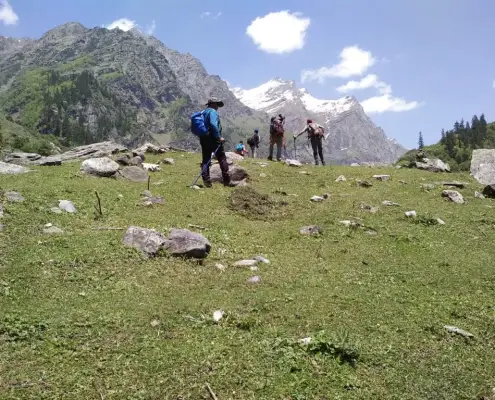
Today’s trek continues along the Jagatsukh Nallah, with the trail gradually opening into expansive alpine meadows. We pass through lush green fields, glacial streams, and stunning mountain scenery. By afternoon, we reach Seri, a vast alpine plateau that was once a glacial lake and is now a spectacular high-altitude meadow during summer. The campsite offers breathtaking views and a peaceful environment. Overnight stay in tents at Seri.
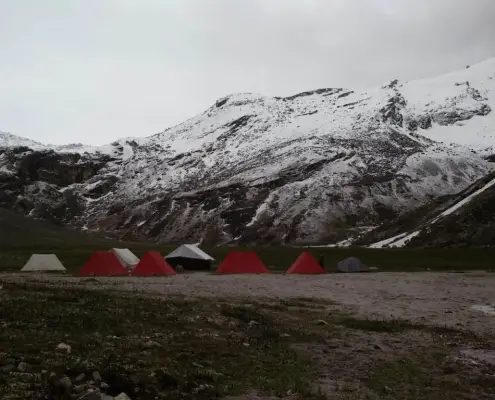
We trek further into the upper valley, gradually gaining altitude as the terrain becomes more rugged and remote. The route follows the river, crossing moraines and offering dramatic views of waterfalls, rocky ridges, and surrounding snow-clad peaks. By afternoon, we arrive at Tenta, the Base Camp of Deo Tibba. After setting up camp, the rest of the day is spent resting, hydrating, and soaking in the high-altitude environment. Overnight in tents at Base Camp.
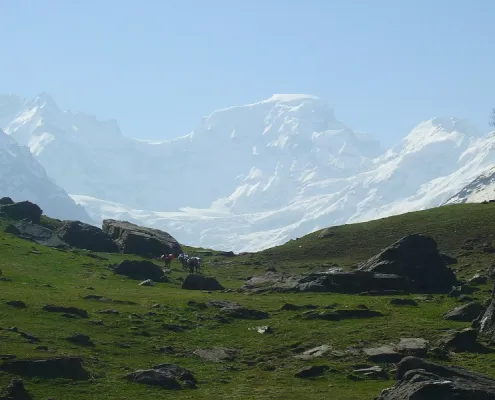
This day is dedicated to acclimatization and skill development to ensure safety at higher altitudes. Participants may take short acclimatization walks around Base Camp while enjoying views of Deo Tibba and surrounding peaks. The expedition leader conducts guided training sessions, including rope techniques, use of climbing equipment, glacier travel basics, and safety protocols. Adequate rest and hydration are emphasized. Overnight in tents at Base Camp.
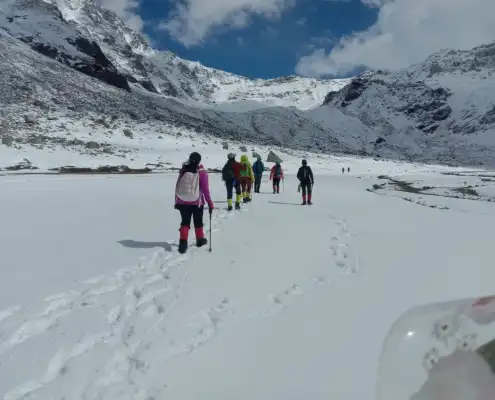
Today, we carry loads and essential equipment toward Camp 1, following the glacier route. This load ferry helps with acclimatization and prepares the route for the move ahead. After depositing supplies at Camp 1, we descend back to Base Camp. The remainder of the day is spent resting and recovering. Overnight in tents at Base Camp.
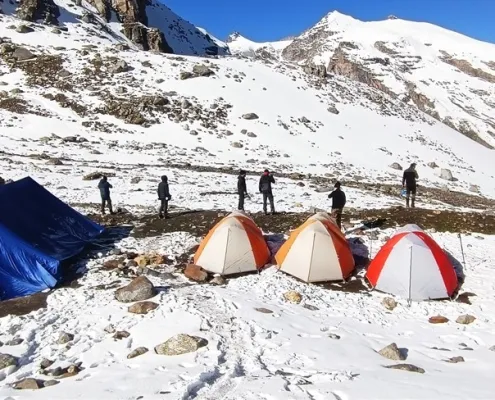
After an early start, we move up to Camp 1 along the previously prepared route. The climb involves glacier travel and steady ascent, requiring careful footing and teamwork. Upon reaching Camp 1, we set up camp and settle in. The evening is reserved for rest, hydration, and an early dinner in preparation for higher camps. Overnight in tents at Camp 1.
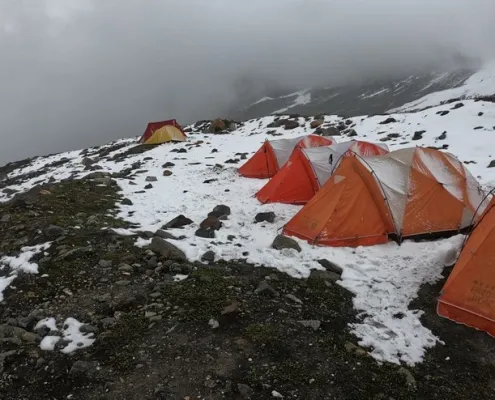
Depending on route conditions and weather, we carry loads toward the Summit Camp. This section may involve steeper snow slopes and technical terrain. After establishing the route and depositing equipment, we descend back to Camp 1 for rest. This gradual approach improves acclimatization and increases summit success chances. Overnight in tents at Camp 1.
Today, we move up to Summit Camp, located close to the summit ridge. The terrain becomes more alpine and exposed, requiring focused movement. Upon arrival, tents are set up, and a detailed summit briefing is conducted covering route details, weather expectations, turnaround times, and safety measures. An early night is encouraged. Overnight in tents at Summit Camp.
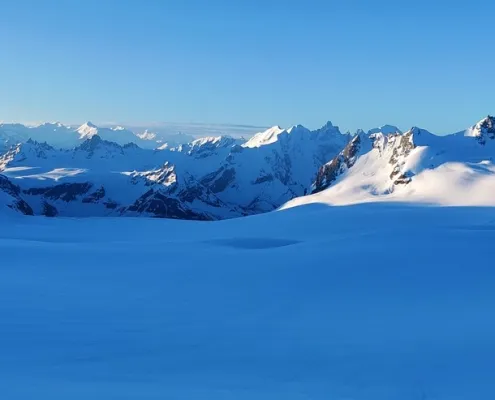
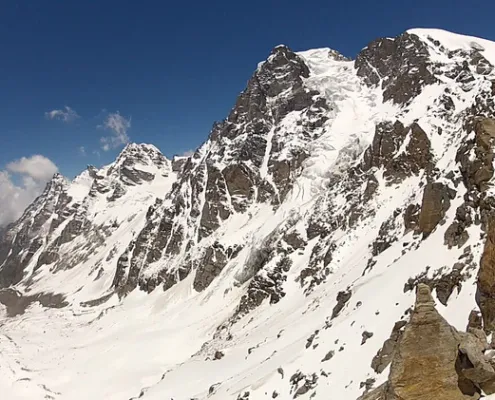
We begin the summit push very early in the morning under headlamp light. The climb involves navigating snow and ice slopes as we steadily make our way toward the summit. Upon reaching the summit of Deo Tibba (6,001m), we are rewarded with spectacular panoramic views of Indrasan, Norbu, and the surrounding Himalayan giants. After spending a short time at the top, we carefully descend back via Summit Camp and continue down to Camp 1. Overnight in tents at Camp 1.
This day serves as a buffer in case of bad weather or for a summit attempt if Day 10 was not favorable. If the summit was successfully achieved on Day 10, we begin descending toward Base Camp, enjoying the gradual return to lower altitudes. Overnight in tents at Camp 1 or Base Camp, depending on progress.
We continue our descent through the familiar trail, moving past Base Camp and further down to Chikka. The change in altitude brings noticeable relief, and the surroundings once again become greener and warmer. On arrival, we set up camp and enjoy a relaxed evening. Overnight in tents at Chikka.
After breakfast, we trek down from Chikka to Khanol, completing the trekking portion of the expedition. From Khanol, we drive back to Manali and check in to the hotel. The evening is free to relax, explore the town, or celebrate the successful completion of the climb. Overnight at the hotel in Manali.
After breakfast, we check out from the hotel. The expedition officially concludes, and participants depart with unforgettable memories of their Deo Tibba summit adventure.
Transportation
Accommodation
Meals
Trek Leadership & Support Staff
Camping & Safety Equipment
Permits & Administration
Additional Benefits
Travel & Transportation Outside Trek Itinerary
Personal Equipment & Gear
Personal Expenses
Insurance & Medical
Miscellaneous
Please read carefully before registering
At Boots & Crampons, preparation is not optional. The level of training required depends on the duration, altitude, and technical difficulty of the trek or expedition you are signing up for.
Proper preparation increases not just your chances of success, but also your safety and enjoyment in the mountains.

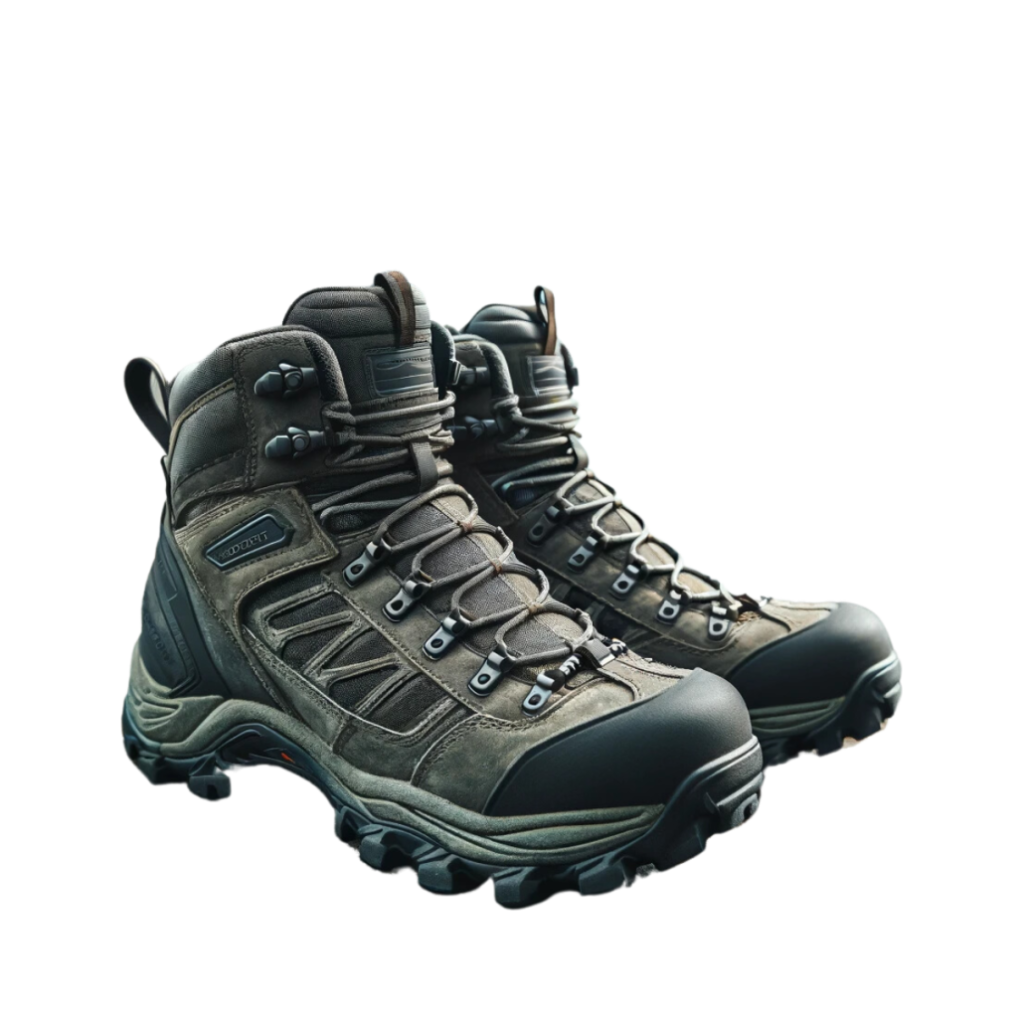

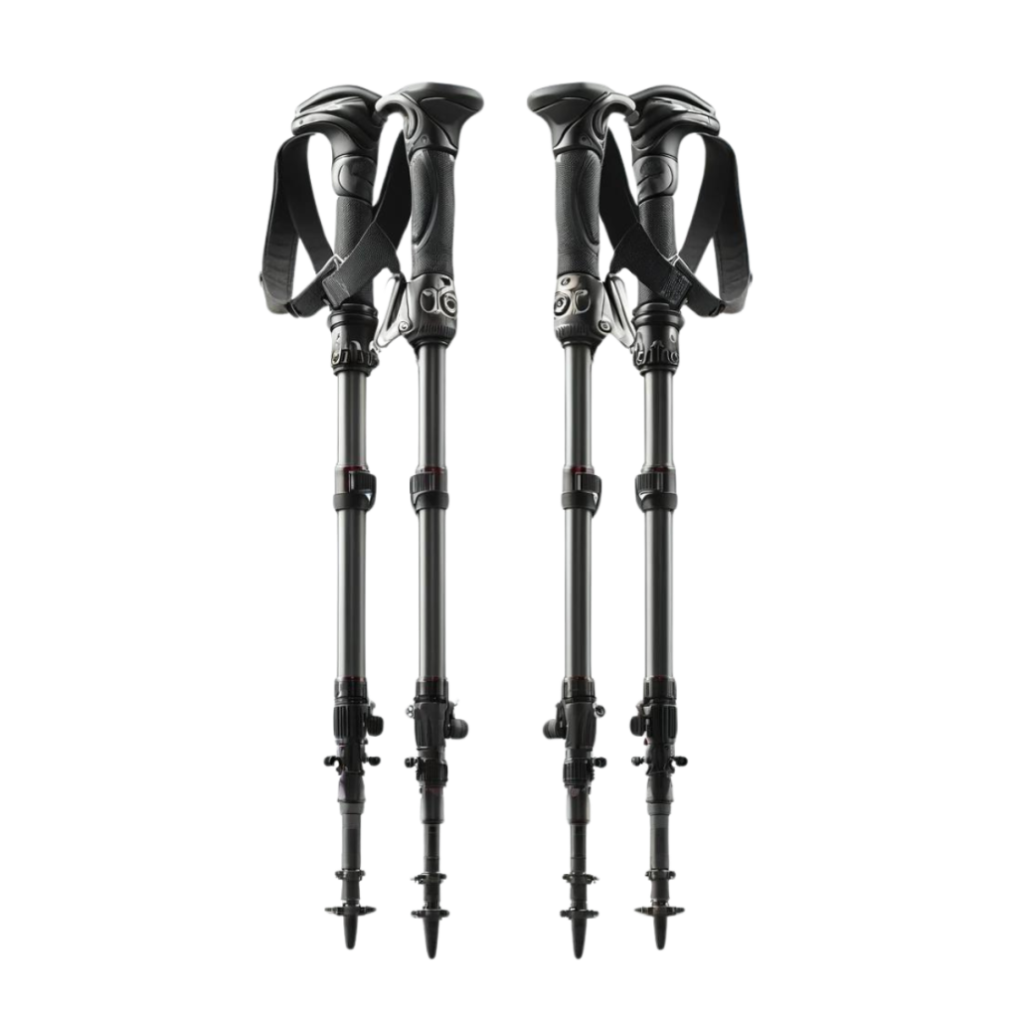
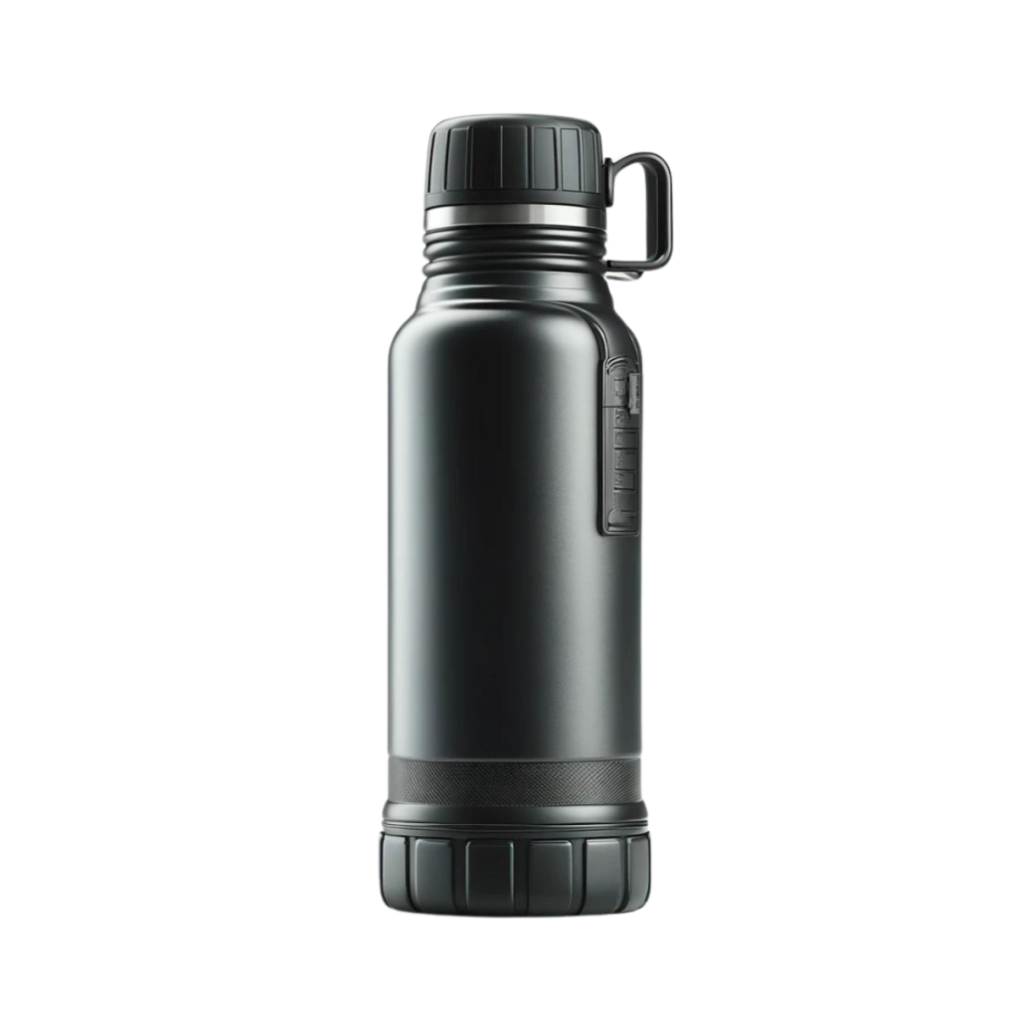


*Rental Gears Required*
Visit our Contracted Business Partner website – Summit Yak
for details on trek-specific rental gears and rates.
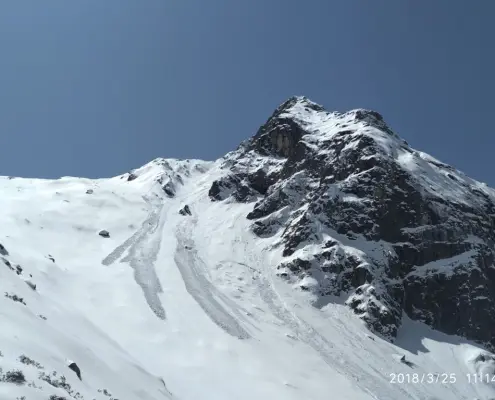
The climb involves high-altitude trekking terrain, rocky and scree slopes, glacier travel, snow and ice slopes, and final summit sections with steep snow/ice gradients. While not extremely technical, the summit push demands careful footwork, crampon use, and exposure management.
The summit of Deo Tibba reaches 6,001 m (19,688 ft) — a serious high-altitude objective in the Pir Panjal range of the Indian Himalayas.
Deo Tibba is considered a moderate to technical high-altitude expedition. Although it does not require advanced rock climbing skills, the climb involves:
This is not suitable for beginners.
You do not need advanced technical rock climbing experience, but you do need to be familiar with:
Prior high-altitude expedition experience is strongly recommended.
The best climbing windows are:
Typical itineraries are 10–14 days, including:
Daily activity can range from 6 to 10+ hours depending on altitude and conditions.
Participants should have:
➡️ Refer to the Preparation Guide for detailed fitness, conditioning, and training expectations.
Key gear includes:
A detailed gear checklist is included in the Preparation Guide.
Water is obtained from glacial streams and snow melt. The expedition team treats water, but climbers should carry personal purification tablets or filer water bottles as backup
Deo Tibba is a rewarding Himalayan expedition that blends physical endurance, snow/ice travel, and high-altitude challenge. With disciplined preparation and respect for mountain conditions, this climb is accessible and fulfilling for well-trained adventurers.
Boots & Crampons staff of highly trained professional guides is here to make your journey as safe and secure as possible. All of our trekking guides are medically certified and have abundant experience using their training in mountainous environments.
Our safety standards are based on the experiences of our founder, managing risk in some of the world’s most hostile environments.
While we advise our trekkers to carry light, our guides are always prepared with:
Be it queries about the trek, customization or anything else, our team is eager to assist you.
Need your questions answered right away?
Get in touch with us at
Discover similar treks from Boots & Crampons that quench your thirst for adventure.

Discover similar treks from Boots & Crampons that quench your thirst for adventure.